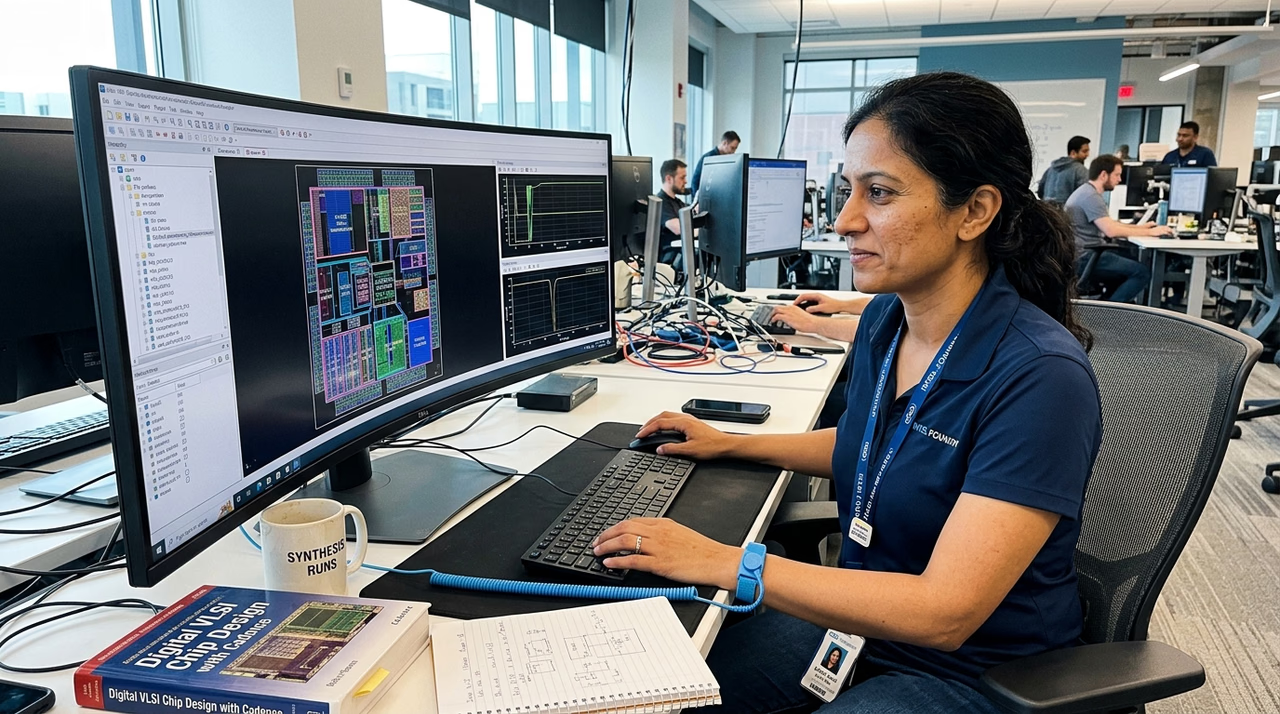
In a hardware release first broken by The Verge, HP has introduced the OmniBook 5 with a disruptive starting price of $699. Featuring Qualcomm’s 8-core Snapdragon X Plus processor, an integrated 45 TOPS Hexagon Neural Processing Unit (NPU), and a 2K OLED panel, the device does something far more consequential than undercut Apple’s MacBook Air: it demolishes the capital expenditure barrier separating enterprise workforces from local, zero-egress generative AI execution.
Until now, enterprise IT procurement teams looking to deploy Copilot+ PCs or run local Small Language Models (SLMs) faced a brutal economic reality: dedicated AI hardware was locked behind premium $1,200 to $2,400 workstation SKUs. Consequently, Fortune 500 enterprises funneled billions of dollars into hyperscaler API endpoints - incurring per-token inference charges, high network egress fees, and acute data privacy liabilities.
At $699, the unit economics invert. When every frontline laptop in a healthcare network or financial institution carries a 45 TOPS NPU and 20+ hours of battery life within a sub-15W thermal envelope, the default architectural assumption changes: inference belongs on the edge, and enterprise data never leaves volatile local memory.
The Silicon Architecture: Inside Snapdragon X Plus (X1P-42-100)
The engineering nucleus of the OmniBook 5 is Qualcomm’s tailored Snapdragon X Plus platform. Rather than cannibalizing server-grade dies, the SoC is designed specifically for low-thermal, continuous tensor arithmetic:
- Oryon ARM64 CPU Cluster: 8 performance cores running up to 3.4 GHz (with single-core boost to 4.0 GHz), eliminating power-hungry x86 micro-op translation decoders and achieving up to 65% lower CPU power consumption at ISO-performance compared to Intel Core Ultra (Meteor Lake).
- Hexagon NPU (45 TOPS): Dedicated dual-microcore neural accelerator capable of 45 Trillion Operations Per Second on quantized INT8 and FP16 tensor graphs. It operates completely asynchronously from the CPU and Adreno GPU, drawing less than 3.5 Watts during continuous matrix multiplications.
- LPDDR5X-8448 Unified Memory Bus: 135 GB/s memory bandwidth shared seamlessly across CPU, GPU, and NPU via a low-latency coherent interconnect. This eliminates PCIe bus transfer penalties when moving model weights from system memory into accelerator cache.
Why 45 TOPS is the Magic Number
Microsoft’s Copilot+ specification establishes 40 TOPS as the non-negotiable threshold for on-device real-time neural execution (Recall indexing, Cocreator neural diffusion, live speech translation, and background segmentation). By delivering 45 TOPS at $699, HP makes high-performance local AI standard-issue equipment for every knowledge worker.
Token Economics: Cloud APIs vs. Local NPU Amortization
To understand the enterprise magnitude of this release, compare the total cost of ownership (TCO) between centralized cloud model calls (e.g., GPT-4o mini, Claude 3.5 Haiku) and local edge inference running quantized SLMs (Llama 3.2 3B, Phi-3.5 Mini, Gemma 2 2B) on an employee fleet of 5,000 devices:
Assumptions:
- Fleet Size: 5,000 employees
- Workload: 250 queries/day/user (avg 1,200 input tokens + 300 output tokens = 1,500 tokens/query)
- Total Daily Token Volume: 5,000 * 250 * 1,500 = 1.875 Billion Tokens / Day
- Annual Work Days: 250 days -> 468.75 Billion Tokens / Year

Option A: Centralized Cloud Model API ($0.25 / 1M tokens blended)
  Annual API Cost: 468,750 * $0.25 = $117,187 / year
  High-Tier Model API ($1.50 / 1M tokens blended): $703,125 / year
  Egress & Network Gateways: ~$45,000 / year
  Total 2-Year Cloud Run-Rate: $324,374 - $1,496,250

Option B: $699 OmniBook 5 Fleet Running Quantized INT4 SLMs Locally
  Laptop Capital Hardware Cost: 5,000 * $699 = $3,495,000 (standard hardware refresh cycle)
  Marginal Token Cost: $0.00 (Processed entirely on local Hexagon NPU)
  Network Bandwidth Consumed: 0 bytes egress
  Cloud Ingestion Infrastructure Saved: 100%
When laptops are already budgeted under regular corporate hardware replacement cycles, the marginal cost of on-device tokens drops to zero. Enterprises can run continuous background semantic search, real-time code autocomplete, and confidential summarization without generating a single cent of variable API spend.
The OLED Display & Thermal Power Envelope
Historically, introducing an OLED display to a budget chassis decimated battery endurance. In the OmniBook 5, the convergence of ARM efficiency cores and self-emissive organic diodes creates an optimal symbiotic relationship:
- Pixel-Level True Black Zero-Power States: In standard enterprise IDEs, terminals, and corporate dark-mode interfaces, up to 72% of pixels are completely powered down, cutting panel power consumption from 4.8W to 1.3W.
- Sub-15W Total Platform Power (TPP): Under sustained 35-token-per-second local neural inference, the Snapdragon X Plus draws approximately 11W to 14W total platform power, allowing fanless or near-silent acoustic profiles without thermal throttling.
- 20+ Hour Enterprise Battery Life: Eliminates power-adapter tethering in clinical hospital rounds, field audits, and executive transit.
Architectural Comparison: Enterprise Client Hardware Matrix
| Attribute | Intel Core Ultra 7 (x86_64) | Apple M3 MacBook Air (ARM) | HP OmniBook 5 (Snapdragon X Plus) |
|---|---|---|---|
| Base Starting Price | $1,199 - $1,499 | $1,099 | $699 |
| Dedicated NPU Throughput | 11 - 16 TOPS (Legacy Gen 1) | 18 TOPS (ANE) | 45 TOPS (Hexagon NPU) |
| Memory Bus Bandwidth | 74.6 GB/s LPDDR5X | 100 GB/s Unified LPDDR5 | 135 GB/s LPDDR5X-8448 |
| Display Technology | IPS LCD (FHD / QHD) | Liquid Retina IPS LCD | 2K OLED (100% DCI-P3) |
| Copilot+ Certification | No (Requires Lunar Lake v2) | No (Proprietary Apple Intelligence) | Native Copilot+ Hardware Ready |
| On-Device 3B SLM Speed | 12 - 16 tokens/sec | 28 - 34 tokens/sec | 38 - 45 tokens/sec (INT4) |
The Regulated Enterprise Impact: Zero-Egress Data Trust
Beyond raw hardware economics, the deepest strategic consequence of sub-$700 45 TOPS silicon is epistemic data security. In regulated verticals - such as healthcare (HIPAA), banking (GLBA/FINRA), and defense (CMMC) - the greatest obstacle to AI adoption has always been the egress boundary:
[Client Application / Local EHR / Banking Terminal]
       │
       ▼ (Private Customer Record / PHI in Memory)
[Volatile RAM Buffer (Zero Disk Write)]
       │
       ▼ (Direct Unified Memory DMA Transfer)
[Snapdragon X Plus Hexagon NPU (45 TOPS)]
 ├─ Model: Llama-3.2-3B-Instruct (INT4 Quantized)
 ├─ Latency: 22ms Time-To-First-Token (TTFT)
 ├─ Generation: 42 tokens/sec
 └─ Local Rule Verification: Strict Regex / Invariant Enforcement
       │
       ▼
[Instant Ephemeral Buffer Scrub]
 ├─ Memory explicitly zeroed (explicit_bzero)
 ├─ NO OUTBOUND TLS CONNECTION TO HYPERSCALER
 └─ ZERO RAW PAYLOAD EXTRUSION TO THIRD PARTIES
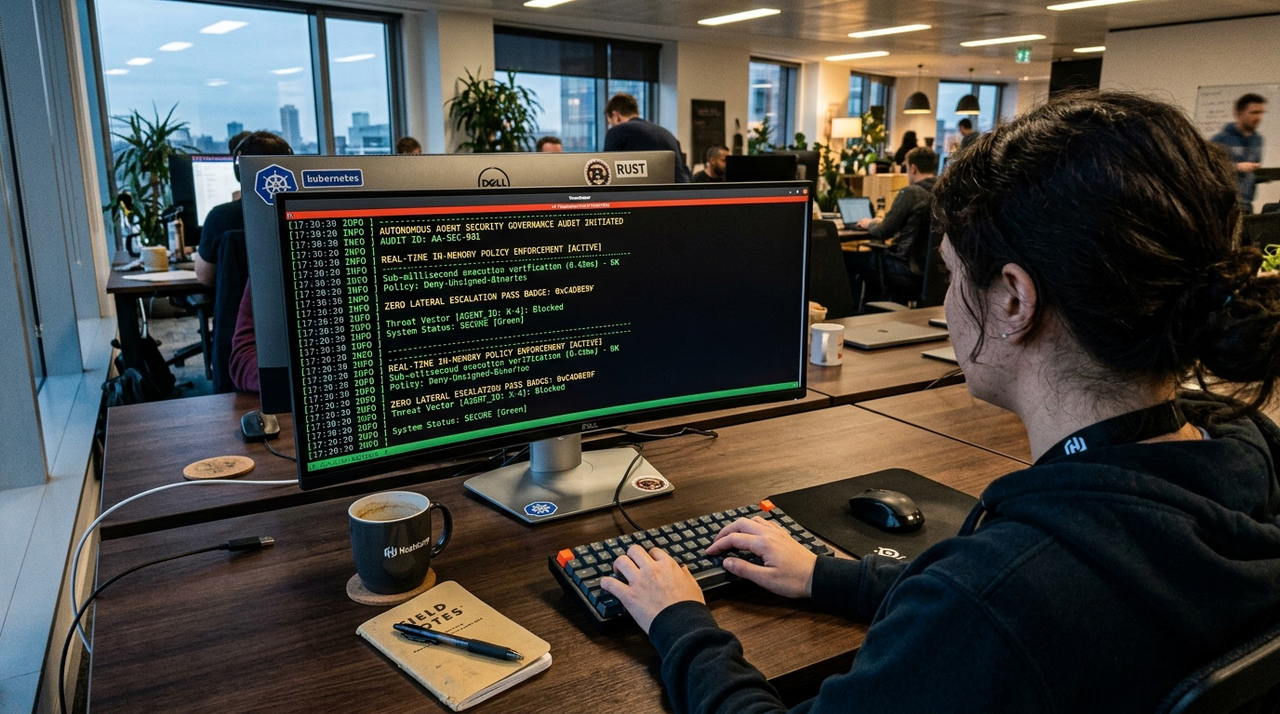
This matches the foundational premise of Fraoula Data Auditor:
- Data Sovereign to the Device: When compliance officers review anti-money laundering (AML) alerts or clinicians summarize patient charts, the entire inference lifecycle occurs in local volatile DRAM.
- Zero Third-Party Vendor Risk: Eliminates Business Associate Agreements (BAAs) with external model hosting providers and circumvents cloud downtime.
- Deterministic Audit Records: The device produces signed telemetry metrics (e.g., checksums, compliance scores, execution latency) while the underlying confidential payload is purged from volatile memory upon task completion.
Conclusion: The Sunset of the Workstation Tax
The HP OmniBook 5 marks the end of the artificial premium on neural compute. By delivering 45 TOPS of tensor acceleration, unified 135 GB/s memory bandwidth, and an OLED panel at $699, Qualcomm and HP have commoditized on-device AI.
For enterprise architecture leaders, the roadmap is unambiguous: cease building fragile, expensive cloud pipelines for workloads that can run instantaneously on the user’s lap. The future of enterprise intelligence is local, power-efficient, and mathematically sovereign.
Enforce Zero-Egress Governance Across Your Data Fleet
Audit stream integrity, prevent data poisoning, and enforce strict zero-payload persistence across distributed enterprise pipelines with Fraoula Data Auditor.
Frequently Asked Questions
What is the Snapdragon X Plus processor in the HP OmniBook 5?
The Snapdragon X Plus is Qualcomm's 8-core ARM64 processor built on the Oryon architecture. It features 8 performance cores running up to 3.4 GHz, an Adreno GPU, and a dedicated 45 TOPS Hexagon NPU designed for sustained on-device AI acceleration with ultra-low power consumption.
Why is a 45 TOPS NPU significant for enterprise software?
A 45 TOPS NPU satisfies Microsoft's Copilot+ baseline, enabling continuous on-device neural tasks - such as semantic document indexing, real-time audio translation, and Small Language Model (SLM) text generation - without offloading sensitive company data to external cloud APIs or consuming high CPU battery power.
How does zero-egress local AI inference protect regulated enterprises?
In healthcare (HIPAA) and financial services (GLBA/FINRA), sending sensitive customer data to cloud LLM APIs creates third-party breach exposure and compliance liabilities. Zero-egress local processing executes models entirely in local device RAM, ensuring private customer records are never transmitted across the public internet.