
Most companies build AI with a small centralized team and hand it down to the factory floor. Toyota did the opposite. They gave the factory floor the tools to build AI themselves.
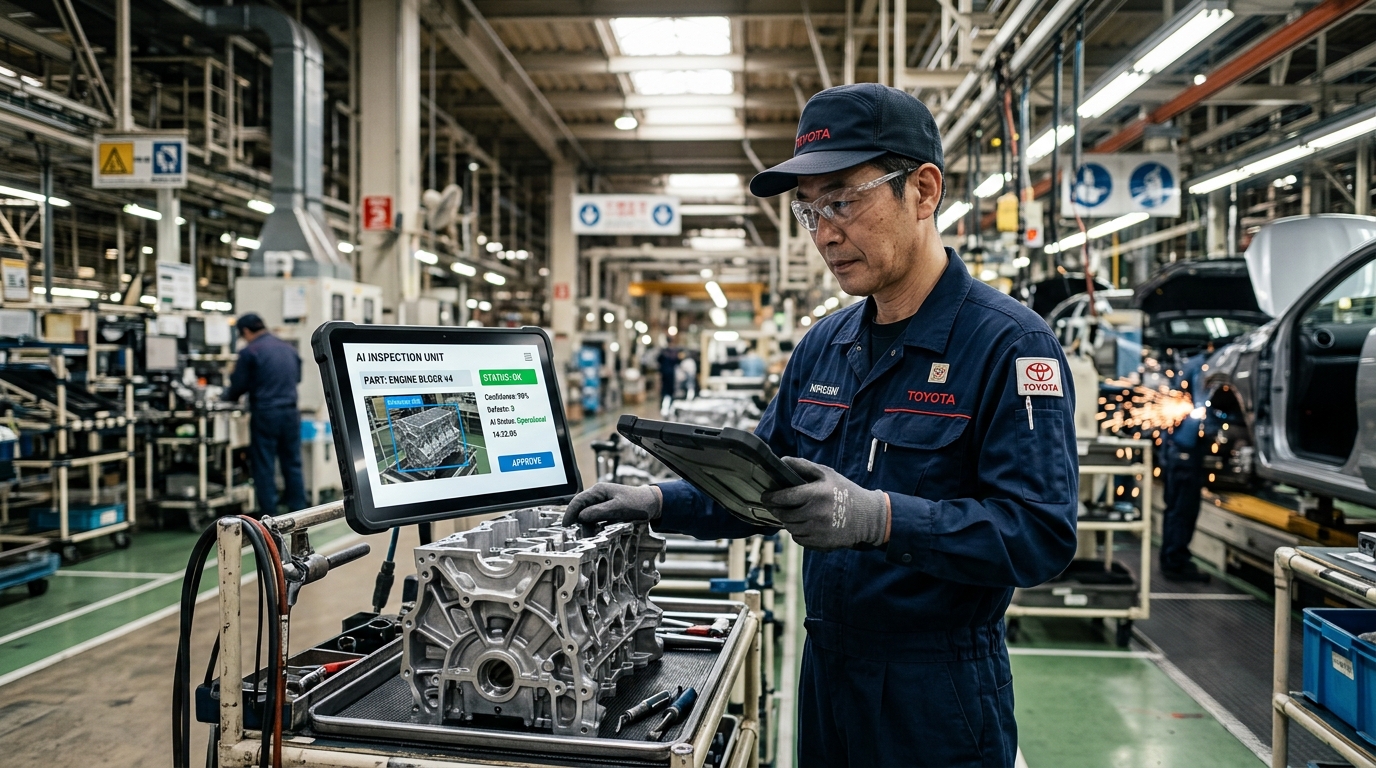
Here's the number that stopped me. In 2023, Toyota's frontline factory workers - not data scientists, not a centralized AI team - had created 8,000 AI models using an internal no-code platform. By 2024, that number climbed to 10,000.
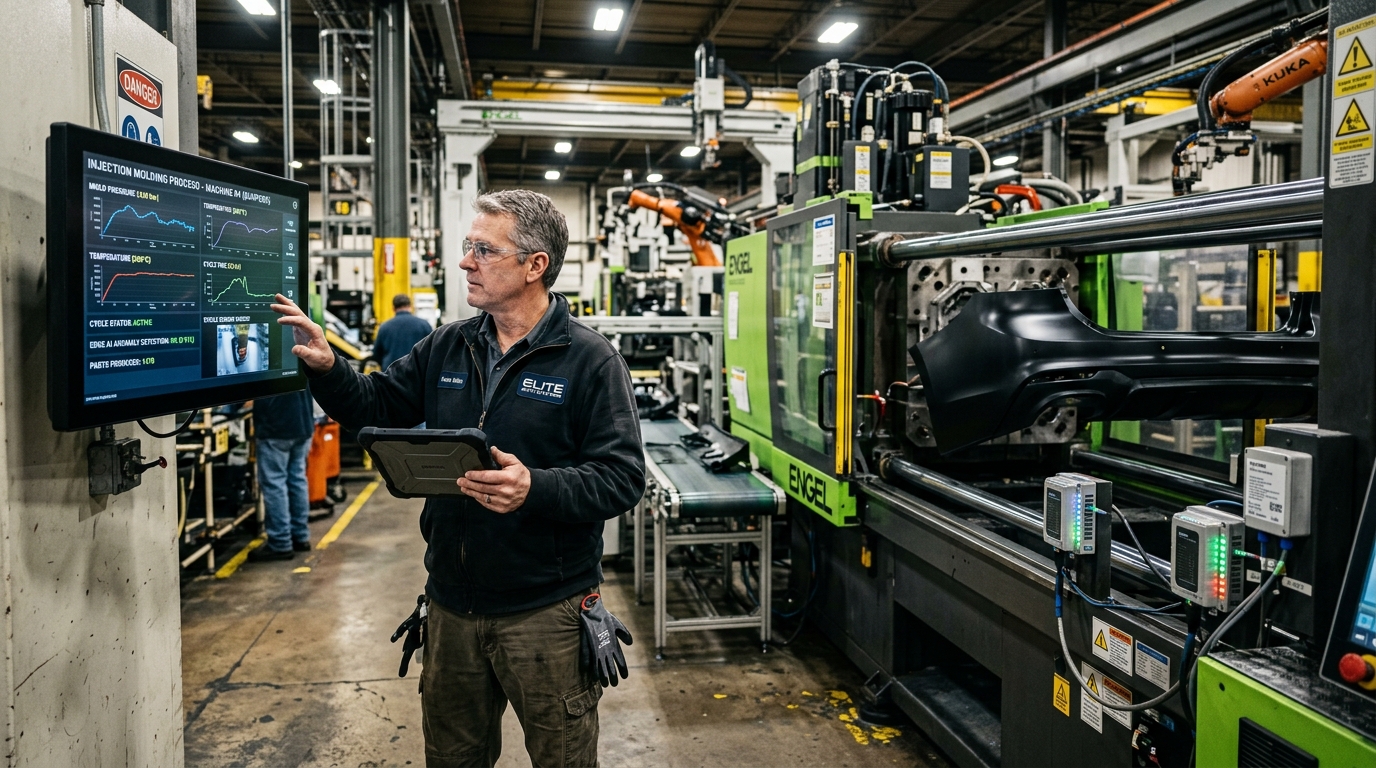
Most corporations celebrate deploying a few dozen AI applications company-wide. Toyota's own line workers built ten thousand of them, each one solving a specific, narrow problem on their own production line, whether that's spotting a defective weld or catching an anomaly in an injection molding machine.
10,000 Man-Hours Saved & Plant-Level Execution
The platform is now live across all 10 Toyota car and unit manufacturing factories, and the collective result is a reduction of over 10,000 man-hours per year in the actual manufacturing process.
At the Takaoka factory specifically, the same platform now inspects finished parts, checks adhesive application on back door glass, and detects abnormalities in the machines that mold bumpers - all built by the people running that equipment every day, not by engineers who've never stood on that specific line.
"The person closest to the work understands the problem better than any central team ever could. Giving them authority to build AI is the natural evolution of Kaizen."
Deep Alignment with the Toyota Production System
Here's why this fits naturally with how Toyota already runs. Their Toyota Production System (TPS) has spent seven decades built around one core idea: giving the person closest to the work the authority to stop the line and fix a problem the moment they see it.
AI democratization isn't a break from that philosophy. It's the exact same philosophy, just handed a more powerful tool.
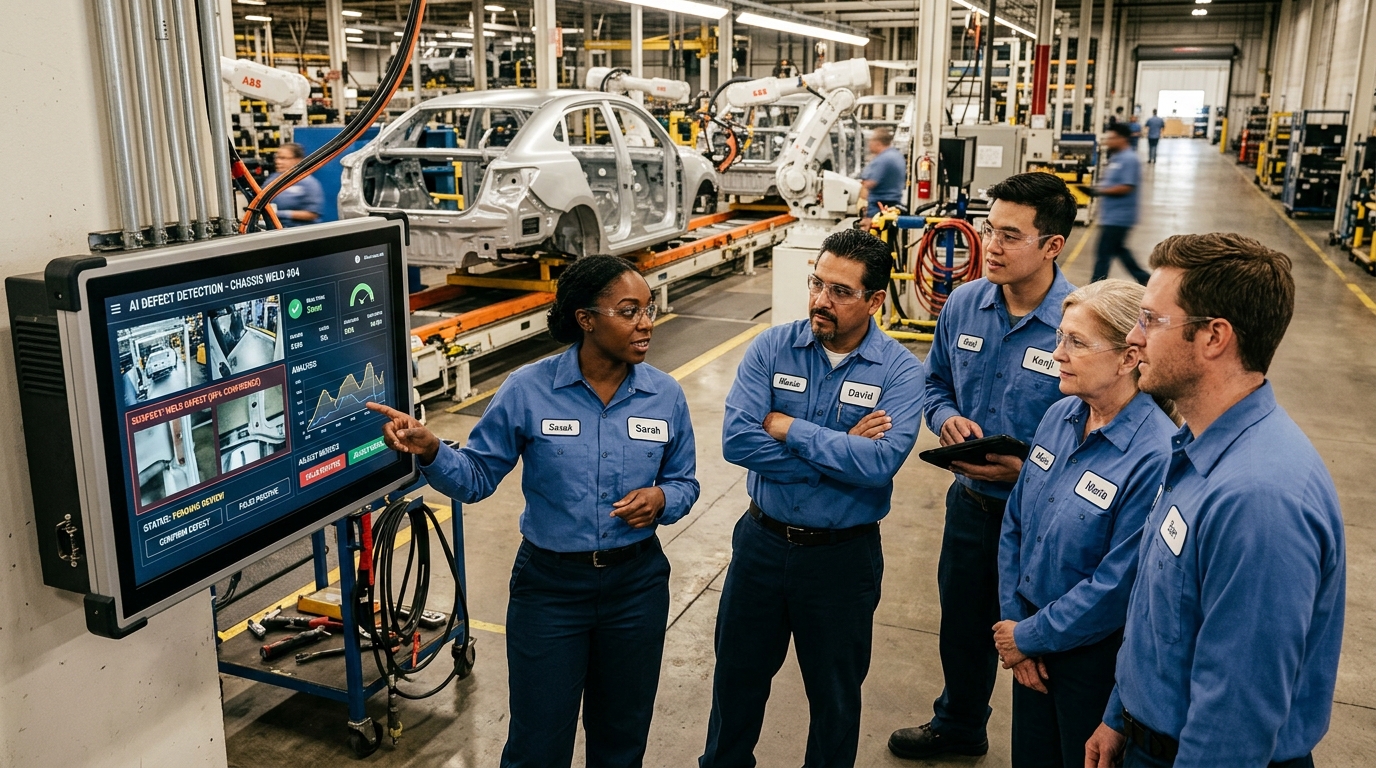
Toyota's own leadership has been explicit about the intent. Chairman Akio Toyoda has said the goal is analyzing the habits and workflows of experienced engineers and line workers to help train new employees faster, and to reduce the mental workload baked into manufacturing - not to eliminate the people doing the work.
The Core Strategic Lesson for Enterprise Product Leaders
At Fraoula Services & Architecture, we observe this exact pattern when deploying zero-trust data infrastructure: high-velocity execution occurs when domain experts are empowered with self-serve telemetry engines. Much like our Fraoula Data Auditor enables data engineers to eliminate pipeline schema drift without central data governance bottlenecks, Toyota proves that empowering the edge creates exponential efficiency gains.
Similarly, growth and marketing teams utilizing the Fraoula Marketing Intelligence Platform leverage server-to-server SHA-256 telemetry to make real-time decisions without waiting for centralized BI reporting queues. Explore how our engineering team builds these scalable platforms in our Enterprise Case Studies.
Key Takeaway for Product Leaders
The company that unlocks the most AI value isn't always the one with the biggest centralized AI team. It's sometimes the one that hands the tool to the thousands of people who understand their own specific problem better than any central team ever could, then gets out of the way and lets them build.
Which Global 2000 company should I break down next?