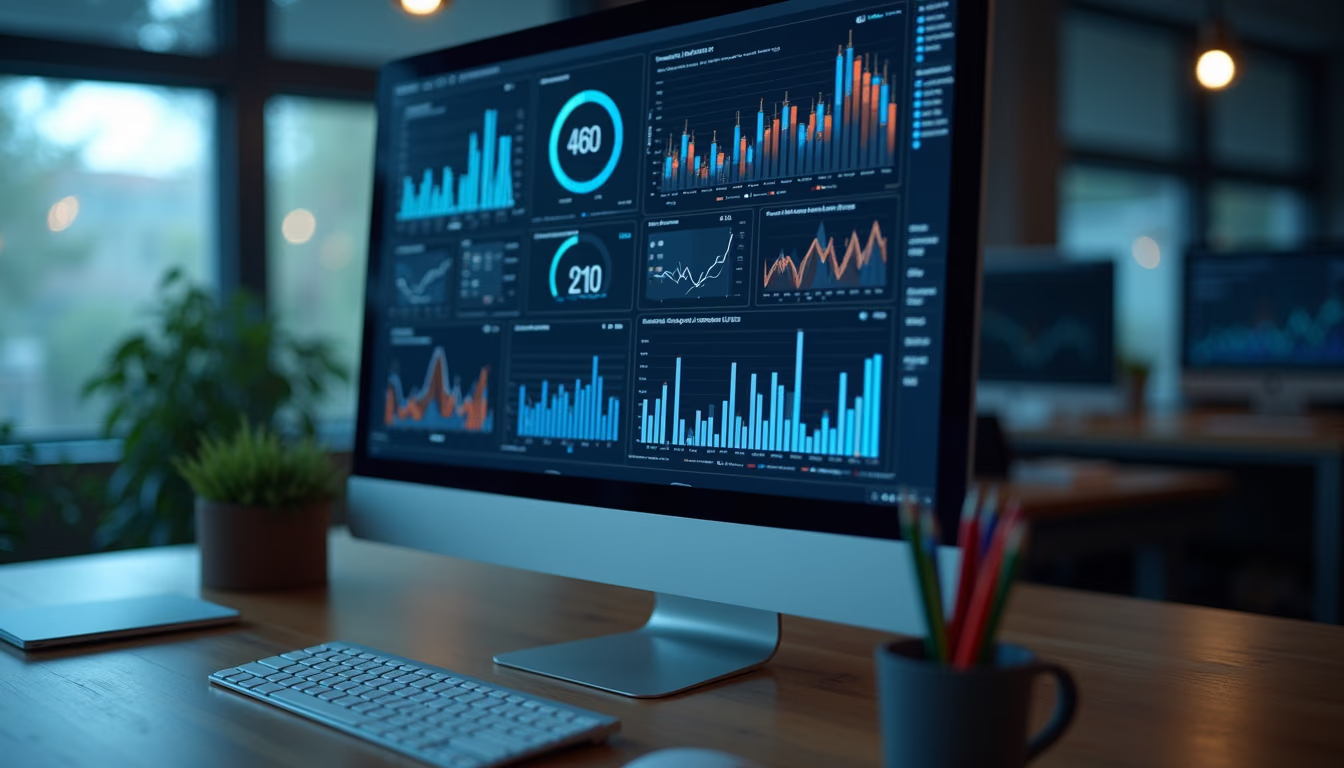

In today's fast-paced digital world, predicting which products will go viral can feel like trying to catch lightning in a bottle. With over 3.5 billion daily searches on Google and the staggering volume of content on social media platforms like TikTok and Instagram, trends can shift in an instant. What if we told you that deep learning could help retailers forecast these viral trends before they hit the mainstream? Imagine a store that could identify that next hot product more accurately than intuition or guesswork. Thanks to advancements in deep learning, this possibility is quickly becoming a reality. In this post, we explore how deep learning algorithms analyze data from various sources to generate insights into consumer behavior. We also discuss how Large Language Models (LLMs) streamline product descriptions, ad creatives, and influencer outreach, helping dropshippers remain competitive in a crowded market. The Power of Deep Learning Deep learning, a part of artificial intelligence, uses artificial neural networks that mimic how the human brain functions. By processing vast amounts of unstructured data, deep learning algorithms uncover complex patterns to make accurate predictions. According to a McKinsey study, businesses integrating deep learning could see operational efficiency rise by up to 40%. With over 1.5 billion posts uploaded on Instagram daily and TikTok’s rapid growth, the amount of user-generated data is overwhelming. By employing deep learning to analyze likes, shares, comments, and hashtags, retailers can spot emerging trends well before they go viral. Forecasting Trends Through Social Data How Social Media Influences Consumer Behavior Social media has drastically changed how consumers connect with brands. A Hootsuite study revealed that 57% of consumers have purchased a product after discovering it on social media, making these platforms a veritable goldmine for trend prediction. Deep learning algorithms process social media data by identifying keywords and relevant themes linked to emerging products. For example, if comments on Twitter spike regarding a particular type of eco-friendly water bottle, retailers can quickly respond to its rising popularity. Integrating tools like Google Trends allows companies to quantify this consumer interest, providing insights into when and where a product might gain traction. Trendy skincare products suggesting market potential. Understanding Emerging Products Through Data Analysis Not all viral products come with hefty marketing budgets. Many low-cost items capture the public's imagination and become bestsellers. Retailers like Amazon have reported that over 87% of their new product launches arise from insights gathered through data analysis. Deep learning algorithms weigh various factors, such as seasonality, cultural shifts, and consumer feedback. For instance, a sudden increase in online searches for biodegradable phone cases could indicate a growing consumer preference for sustainability. This early-stage analysis allows retailers to anticipate trends and act accordingly. Large Language Models: Revolutionizing Product Descriptions and Marketing Instantaneous Ad Creatives and Product Descriptions Once a trending product is identified, it is crucial for retailers to act quickly. This is where LLMs prove invaluable. They can create compelling product descriptions and eye-catching ad creatives in seconds. Research from OpenAI notes that businesses utilizing AI-generated content reported a 30% increase in engagement rates. Picture this: you identify a new, trendy gadget and need a product description. With LLMs, you can have a captivating narrative ready in minutes, enabling swift action before trend momentum wanes. Influencer Outreach Made Easy Influencer marketing is essential for extending a product's reach. However, crafting the perfect outreach message can consume valuable time. LLMs can quickly generate tailored outreach scripts that highlight a product's unique features, making it easier for retailers to establish collaborations with influencers. This is particularly important, as trends can have short life cycles. Staying Ahead in a Crowded Market Identifying Niche Markets As product cycles shorten and competition heats up, dropshippers can struggle to stand out. Deep learning algorithms identify consumer behavior patterns and pinpoint niche markets that larger competitors may overlook. According to Statista, niches like eco-friendly home goods and smart home gadgets have experienced annual growths of 12% and 15%, respectively. Focusing on these underserved areas allows dropshippers to seize opportunities that larger retailers may miss. This data-driven strategy forms a unique selling proposition that differentiates brands from their competition. Diverse home gadgets reflecting innovative trends. Adapting to Consumer Behavior Changes Consumer preferences are always changing, influenced by various factors such as events and cultural trends. Deep learning allows retailers to adapt to these shifts almost in real-time. A recent report found that businesses using data analytics can respond to market changes 5 times faster than those that do not. By keeping an eye on keyword trends in social media, website traffic, and sales figures, retailers can adjust their offerings to align with immediate consumer interests. This adaptability not only strengthens customer relationships but significantly boosts brand loyalty. The Future of Predictive Analytics in Retail The Role of AI in Tomorrow’s Retail Landscape The future of retail is promising, with more retailers adopting AI and deep learning technologies. A report by Deloitte indicates that 80% of retailers plan to integrate AI technologies with their business strategies by 2025. This includes customer relationship management, inventory control, and marketing. As AI becomes further integrated, forecasting viral products will improve. Retailers can better personalize shopping experiences and optimize inventory based on predicted demand, minimizing the risks associated with overstock and understock scenarios. Embracing Ethical AI Practices With great power comes great responsibility. As the retail landscape increasingly relies on AI, ethical practices will be crucial for shaping how data is collected and utilized. Businesses must prioritize transparency and consumer trust by using data responsibly and complying with emerging regulations. Protecting user data benefits brands and fosters loyalty among consumers. Such practices ensure that the trust built will extend beyond temporary trends, laying the groundwork for enduring customer relationships. In Closing The ability to predict the next trending product before it becomes a sensation marks a significant shift in the retail landscape. By leveraging deep learning algorithms to assess social media trends and consumer behaviors, retailers can position themselves ahead of the curve-staying relevant in an oversaturated market. Additionally, as LLMs facilitate content generation and influencer outreach, the agility of dropshippers and retailers can drastically improve. Data-driven choices replace reliance on instinct, empowering businesses to convert consumer insights into actionable strategies. The future of retail forecasting holds immense potential for innovative opportunities. However, maintaining ethical standards in data usage will be vital in fostering consumer trust. As retailers adopt these technologies, aligning with ethical AI practices will build lasting relationships with customers. So, which product do you predict will be the next big sensation? The answer may lie just beneath the surface, waiting to be uncovered by the power of deep learning.
How Deep Learning Predicts the Next Hot Product Before It Takes Off
Fraoula AI Research Team ·
May 24, 2025 ·
Enterprise AI Analysis
TL;DR SUMMARY
In today's fast-paced digital world, predicting which products will go viral can feel like trying to catch lightning in a bottle. With...